Regional Economy · Anosy Region

Economic Overview

One of Madagascar's 12 growth poles — mining, a deep-water port, lobster fishing, agribusiness and tourism shape a regional economy in transformation, driven by the Southern Emergence Plan.

849,024 inhabitants (3 districts)
29 731 km² area
8 sectors analysed
Top 12 SNAT growth poles
Bunkering at the quay (project under way)

A regional economy in transformation
driven by unique structural strengths

National context (Madagascar)

In 2024, Madagascar's GDP reached USD 17.42 billion (World Bank), with growth of +4.2% — stable compared with 2023 — driven by the mining boom, the tourism recovery (308,000 arrivals in 2024, above the pre-pandemic level) and dynamic services. GDP per capita stood at USD 545 in 2024. Inflation remains high (+7.6% in 2024, after +9.9% in 2023). The IMF expects a slight slowdown to +3.9% in 2025, partly due to the new US tariff regime. Public debt, at 50.4% of GDP in 2024, is considered sustainable by the IMF.

Source: World Bank (data.worldbank.org) · French Directorate General of the Treasury, Madagascar country sheet 2025 (tresor.economie.gouv.fr/Pays/MG)

Position of the Anosy Region

The Anosy Region is designated as one of Madagascar's 12 growth poles in the National Land-Use Plan (SNAT). The Southern Emergence Plan (PEM Sud) makes it a priority lever for the economic emergence of the south of the country. With 849,024 inhabitants spread over 29,731 km², the region concentrates in Taolagnaro district alone almost all the major industrial economic operators — QMM/Rio Tinto, the Port of Ehoala, Ehoala Park — as well as most tourism and fishing activity. The regional poverty rate (P0 ratio) stands at 64.9% in urban areas, against a national average of 77.3% in rural areas, reflecting persistent structural challenges despite major investment.

Source: JIR 2023 UNDP/MAE/MID/Anôsy Region · Anôsy Region — region-anosy.mg

+4,2 %
Madagascar GDP growth 2024
World Bank / French Treasury 2025
$17.42 bn
Madagascar GDP 2024 (current USD)
World Bank 2024
849 024
Inhabitants — Anosy Region
JIR 2023 — Anôsy Region
>$131 M
QMM taxes paid to the State (since 2006)
Rio Tinto — riotinto.com/QMM
~50 %
National spiny lobster output
JIR 2023 — Anôsy Region
15,75 m
Port of Ehoala draught
Port d'Ehoala SA — ehoalaport.com
Sector analysis

8 economic sectors
shaping Anosy's economy

From the ilmenite deposit to the Indian Ocean shipping hub, from lobster fishing to cash crops, each sector rests on verifiable data and official sources, all cited.

Vanilla, pink peppercorn and sisal cash crops, Anosy Region, Madagascar
Agribusiness
Export value chains
Vanilla Pink peppercorn Sisal Rice & maize

Farming & Cash Crops

Fast-expanding cash crops — vanilla, pink peppercorn, sisal, chilli, beans, onions — supported by vast available farmland and an agribusiness focus identified as a priority by the PEM Sud.

The Anosy Region has vast stretches of land suitable for farming and extensive livestock raising. Fast-expanding cash and industrial crops include vanilla (high export value), pink peppercorn (Schinus terebinthifolia — a world speciality), sisal (Amboasary Sud district — a historic crop), sugar cane, long pepper (pilipili), beans, onions, groundnuts and tropical fruit. Rice, the staple food, is concentrated in the upper Mandrare basin and on the Betroka plateau. Under the Southern Emergence Plan (PEM Sud), the Regional Governor positions agribusiness as a priority lever by promoting export value chains and creating industrial processing units. 75% of communes have at least one weekly market.

75% of communes have a market
Sisal Amboasary Sud
Vanilla export value chain
PEM Sud priority focus
  • Value chains: vanilla, pink peppercorn, sisal, chilli, beans, onions
  • Food crops: rice (Mandrare basin), maize, groundnuts
  • Districts: Betroka (plateaus), Amboasary Sud (sisal/plains), Taolagnaro (coastal)
  • Vision: agribusiness and processing — PEM Sud / SNAT
  • Source: JIR 2023 UNDP/MAE/Anôsy Region — region-anosy.mg
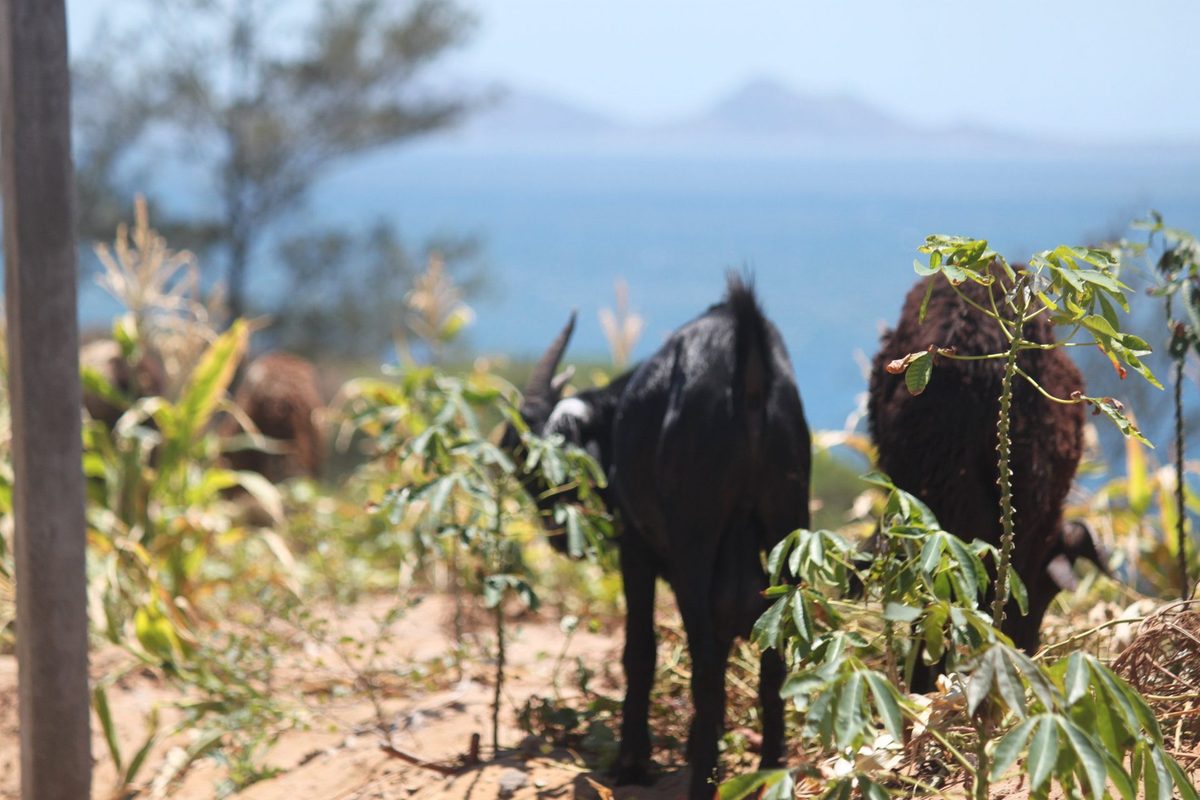
Goats and sheep grazing among cassava plants, facing the ocean, near Fort-Dauphin
Large herds
373,741 cattle
Cattle National & regional macroeconomic context Poultry Beekeeping

Livestock

A cattle herd of 373,741 head (2020 estimate), a goat sector of 250,000 head and emerging beekeeping (42.5 t/year of organic single-flower honey) — led by Betroka district.

Livestock is central to the Anosy Region's rural economy, especially in Betroka district (50% of the regional cattle herd), where the Bara people have developed an age-old cattle-raising tradition. Livestock plays both an economic role (draught animals, dairy, meat) and a cultural one (social pride). The goat herd (250,000 head) receives support from technical and financial partners to professionalise the sector. Poultry is considered the region's most dynamic sector. Beekeeping is growing, with 42.5 t/year of organic single-flower honey (niaouli, pink peppercorn, lychee, multi-flower), 1,400 registered beekeepers and an industrial honey plant (SSM) recently set up in Taolagnaro.

373,741 cattle (2020)
250,000 goats
42.5 t /an miel bio
1,400 beekeepers
  • Cattle: 373,741 head — 50% in Betroka district (SRE Anôsy, 2020)
  • Goats: 250,000 head — sector being professionalised
  • Poultry: 320,000 birds — the region's most dynamic sector
  • Beekeeping: 42.5 t/year of organic honey — 1,400 beekeepers — SSM honey plant in Taolagnaro
  • Source: SRE Anôsy 2020 via JIR 2023 — region-anosy.mg/potentialites-economiques/secteur-elevage
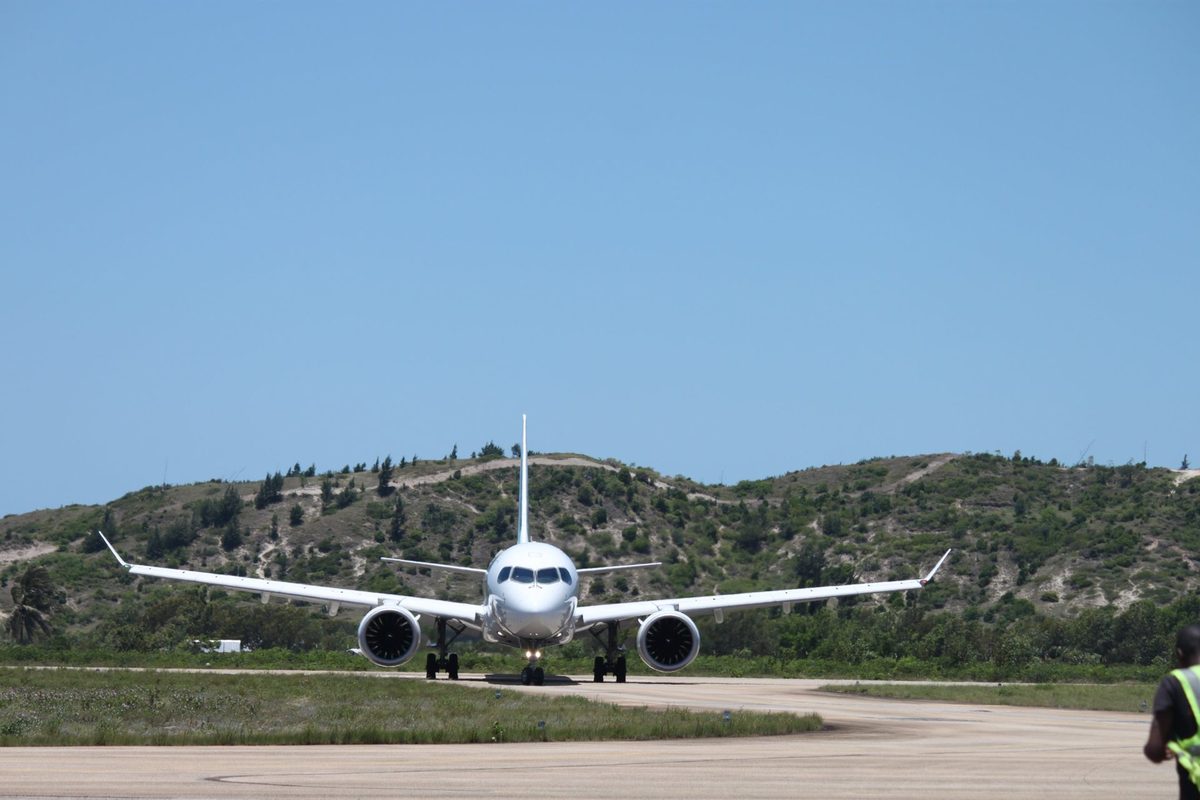
Airliner on the tarmac at Fort-Dauphin airport, the visitors' gateway
International airport
Growing sector
Ecotourism Beach Cruises Lodges

Tourism & Ecotourism

UNESCO national parks (Andohahela, Tsitongambarika), 200 km of unspoilt coastline, Marillac international airport and cruises via the Port of Ehoala — a fast-developing sector.

The Anosy Region has an exceptional tourism heritage: five major protected areas (including UNESCO-listed Andohahela National Park), 200 km of unspoilt coastline, endemic species (5 lemur species can be seen at Sainte-Luce) and uniquely rich landscapes. Infrastructure keeps improving: Marillac international airport (direct flights to Antananarivo) eases access, and the Port of Ehoala now welcomes cruises on the world route. The Manafiafy Beach & Rainforest lodge (Sainte-Luce) represents the region's high-end ecotourism. In 2024, Madagascar recorded 308,000 tourist arrivals, above the 2019 level, driven in particular by the opening of new air links.

5 major protected areas
308k arrivals in Madagascar 2024 (record)
200 km unspoilt coastline
Intl. Marillac airport
  • Parks: Andohahela (UNESCO), Tsitongambarika, Kalambatritra + reserves
  • Access: Marillac international airport — flights to Antananarivo
  • Cruises: 10 calls at the Port of Ehoala in the 2024–2025 season
  • Trend: 308,000 arrivals in Madagascar in 2024 — above pre-pandemic levels
  • Source: French Treasury 2025 | JIR 2023 | africa-press.net (Port of Ehoala cruises)
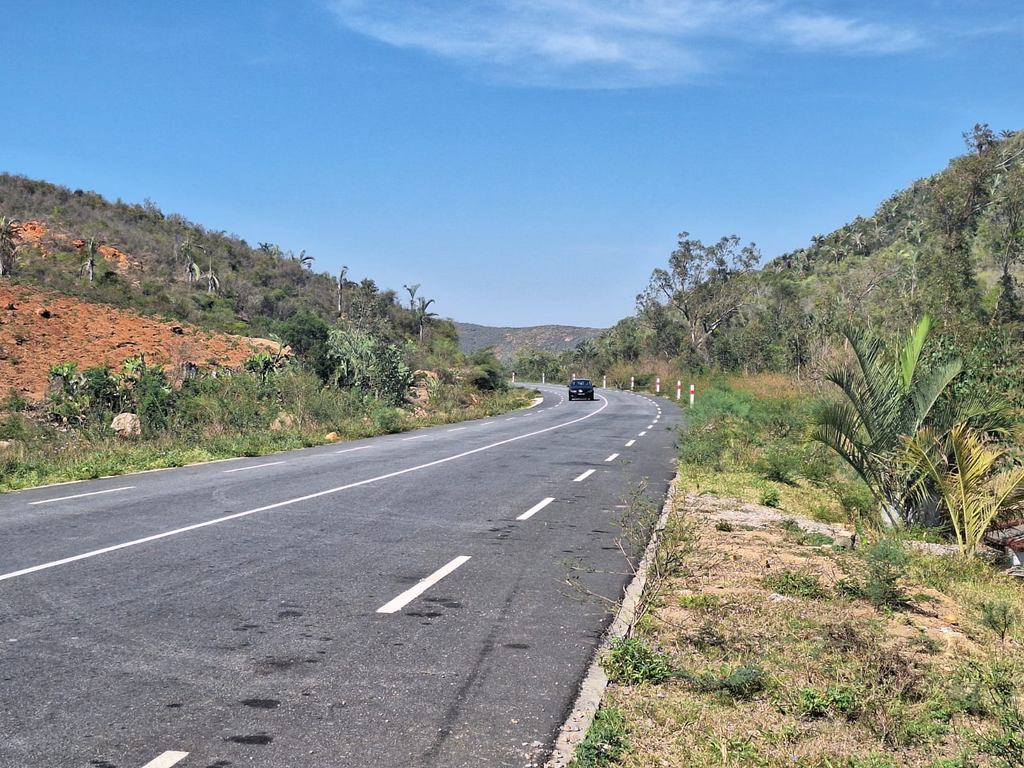
Tarmac road through the hills of the Anosy Region
RN13 under way
Active investment
National roads Renewable energy Fibre optics Airport

Infrastructure & Connectivity

An active infrastructure programme: rehabilitation of the RN13 (Ar 94 bn, co-funded by the State and Rio Tinto — March 2025), a 14 MW solar plant in operation and a 16 MW wind farm under way, fibre optics at Ehoala Park.

The Anosy Region is at the heart of a major infrastructure investment programme. In March 2025, the Malagasy government and Rio Tinto formalised a joint investment of 94 billion Ariary (~USD 20 M) to rehabilitate the RN13 (State: USD 12 M, Rio Tinto: USD 8 M). The RN12A (Fort-Dauphin–Vangaindrano) and RN10 (Fort-Dauphin–Toliara) are also being rehabilitated, improving connectivity in the 3 districts. QMM/CrossBoundary Energy installed a 14 MW solar farm (>26,000 panels, operating since April 2024) supplying Fort-Dauphin (~80,000 inhabitants) and QMM's operations. A 16 MW wind farm (up to 19 turbines) is expected in June 2026. Ehoala Park has a direct fibre-optic connection and extended mobile phone coverage.

Ar 94 bn RN13 investment (2025)
14 MW solar (operating 2024)
16 MW wind (planned 2026)
3 national roads rehabilitated
  • RN13: Ar 94 bn (~$20 M) — State $12 M + Rio Tinto $8 M — March 2025
  • Solar: 14 MW — >26,000 panels — operating since April 2024
  • Wind: 16 MW — 19 turbines planned — commissioning June 2026
  • Digital: fibre optics at Ehoala Park — extended mobile coverage
  • Source: Rio Tinto riotinto.com (RN13, energy) | Ehoala Park ehoalapark.com
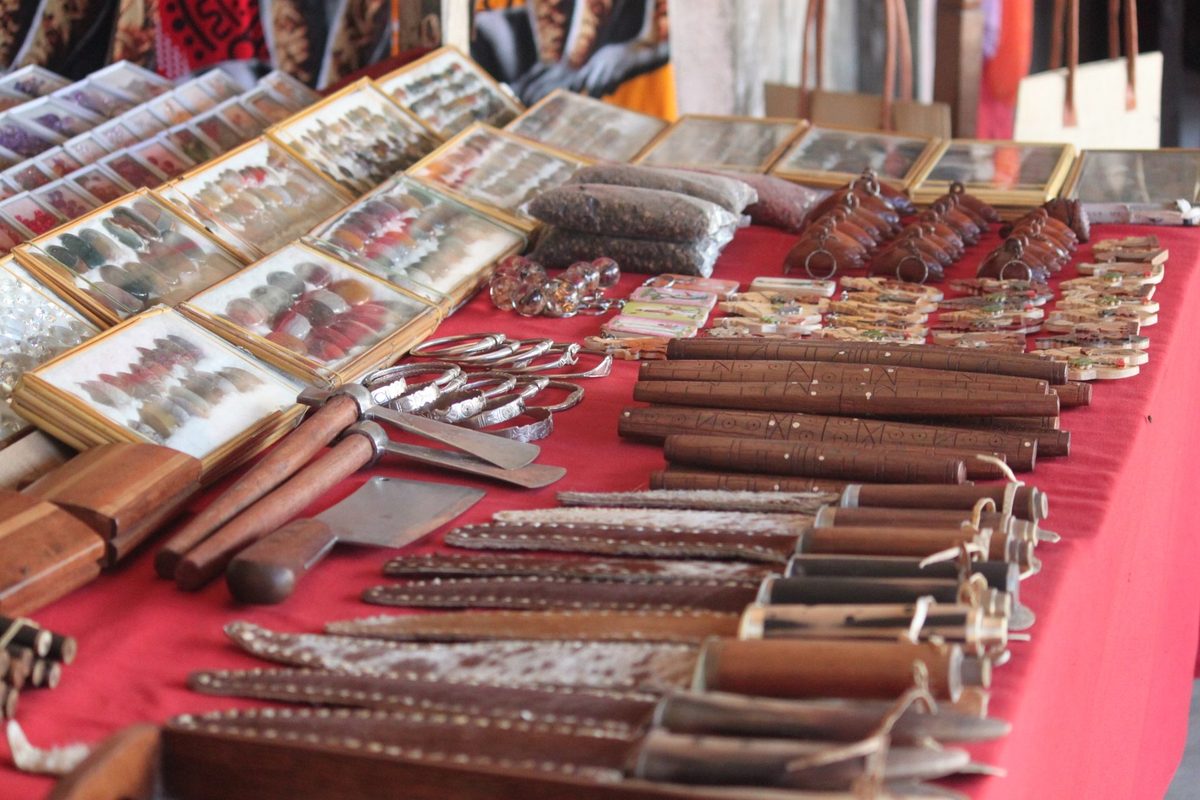
Local crafts stall: polished stones, silver jewellery, knives and carved wooden objects
95% self-employed
Basic fabric
Crafts Cooperatives Local markets

Crafts & Social Economy

95% of regional jobs are self-employed — a robust basic economic fabric built around weekly markets, cooperatives and local craft value chains.

The Anosy Region's economy rests mainly on sole traders (95% according to the Regional Employment Service, 2020). Local crafts include basketry, woodcarving, embroidery and products derived from fishing and livestock. The network of weekly markets (75% of communes have one) is the local sales channel. Agricultural cooperatives (vanilla, pink peppercorn, honey) are beginning to organise value chains to add value. Entrepreneurship initiatives are supported by QMM (Supplier Development programme — bringing local suppliers into its supply chain) and by various NGOs and technical and financial partners in the region.

95% self-employed jobs
75% of communes have a market
Coop. vanilla and honey value chains
TFPs NGO/partner support
  • Structure: 95% sole traders — Regional Employment Service 2020
  • Markets: 75% of communes have at least 1 weekly market
  • Cooperatives: vanilla, pink peppercorn, honey value chains — being organised
  • Supplier Dev.: QMM programme — bringing local SMEs into the supply chain
  • Source: JIR 2023 UNDP/MAE/Anôsy Region — SRE Anôsy 2020
Why invest in Anosy?

An investment environment
that is structured and improving

Port infrastructure

  • Deep-water port 15.75 m Operational
  • Africa–Asia–Americas shipping route Positioned
  • Regular CMA/CGM & MCCL lines Active
  • ISPS, ISO 9001, ISO 14001 certifications Certified
  • Goats / Sheep Under dev.

Ehoala Park Economic Zone

  • 440 ha — secure land tenure Available
  • Land price: USD 1.1/m²/year Competitive
  • 106 investment plots available Planned
  • Direct fibre-optic link Present
  • 14 MW solar renewable energy In service

Connectivity & Access

  • Marillac international airport Operational
  • RN13 — rehabilitation Ar 94 bn (2025) In progress
  • RN12A and RN10 — rehabilitation under way In progress
  • Extended mobile phone coverage Good
  • 16 MW wind farm planned for June 2026 Planned

High-potential value chains

  • Agribusiness & processing (PEM Sud) Priority
  • Aquaculture & seafood processing Potential
  • Tourism & ecotourism (5 protected parks) Growing
  • Renewable energy (solar/wind) Active
  • Artisanal mining (mica, sapphires, graphite) Being organised

Main sources: JIR 2023 — UNDP / MAE / Anôsy Region · Rio Tinto QMM · Port d'Ehoala SA · Ehoala Park · DGT France — Madagascar country sheet 2025 · World Bank

Socio-economic context

Key indicators & challenges
for an informed reading

Any honest economic analysis of the Anosy Region weighs the structural challenges alongside the strengths. These data, from official sources, provide the balanced reading that well-informed investors need.

Population & Employment

  • 849,024 inhabitants — 42% in Taolagnaro district
  • Young population: >50% are under 15
  • Average age of the working population: 28.5 years
  • 95% of jobs are self-employed (mainly informal)
  • Literacy rate: 35.1% (pop. aged 15+)

Source: JIR 2023 / Anôsy Regional Employment Service 2020

Poverty & HDI

  • Urban poverty rate (P0): 64.9%
  • Anosy HDI: highest value 2010–2016 = 0.480 (< average threshold 0.55)
  • Madagascar HDI 2022: 0.49 (ranked 173/191 — UNDP)
  • Prevalence of underweight in under-5s: 24.5%
  • 91% of CSB2 have no doctor — 87% run by paramedics

Source: JIR 2023 / UNDP HDR 2022 / Socio-economic analysis of southern Madagascar, Feb. 2017

3 Districts — Distinct profiles

  • Taolagnaro (5,498 km², 357,609 inhab.) — Economic hub, industry, tourism, fishing
  • Amboasary Sud (10,173 km², 271,008 inhab.) — Sisal, farming, sapphires, salt, zeolites
  • Betroka (14,060 km², 220,492 inhab.) — Cattle (Bara people), plateaus, forests
  • 10 development hubs defined in the Anosy PRD

Source: JIR 2023 — Anôsy Region / PRD Anosy 2021

Structural challenges

  • Rural tracks still impassable in the rainy season
  • Power supply dependent on JIRAMA (insufficient)
  • High national inflation: +7.6% in 2024
  • Climate vulnerability: cyclones, droughts (South)
    (cyclone Gamane — March 2024)
  • Artisanal mica: child labour issues to be addressed (USDOL programme under way)

Source: DGT France 2025 / USDOL / JIR 2023

Investment opportunities

The Anosy Region
awaits you

Explore business opportunities at Ehoala Park, the PEM Sud agribusiness value chains, ecotourism or seafood processing — our teams support you in setting up in the Anosy Region.

Continue exploring
the economy of Anosy