People of the thorns — the resisters of the Deep South
South-west · Tolagnaro & Amboasary Atsimo districts · ~600,000 (2013)
Antandroy
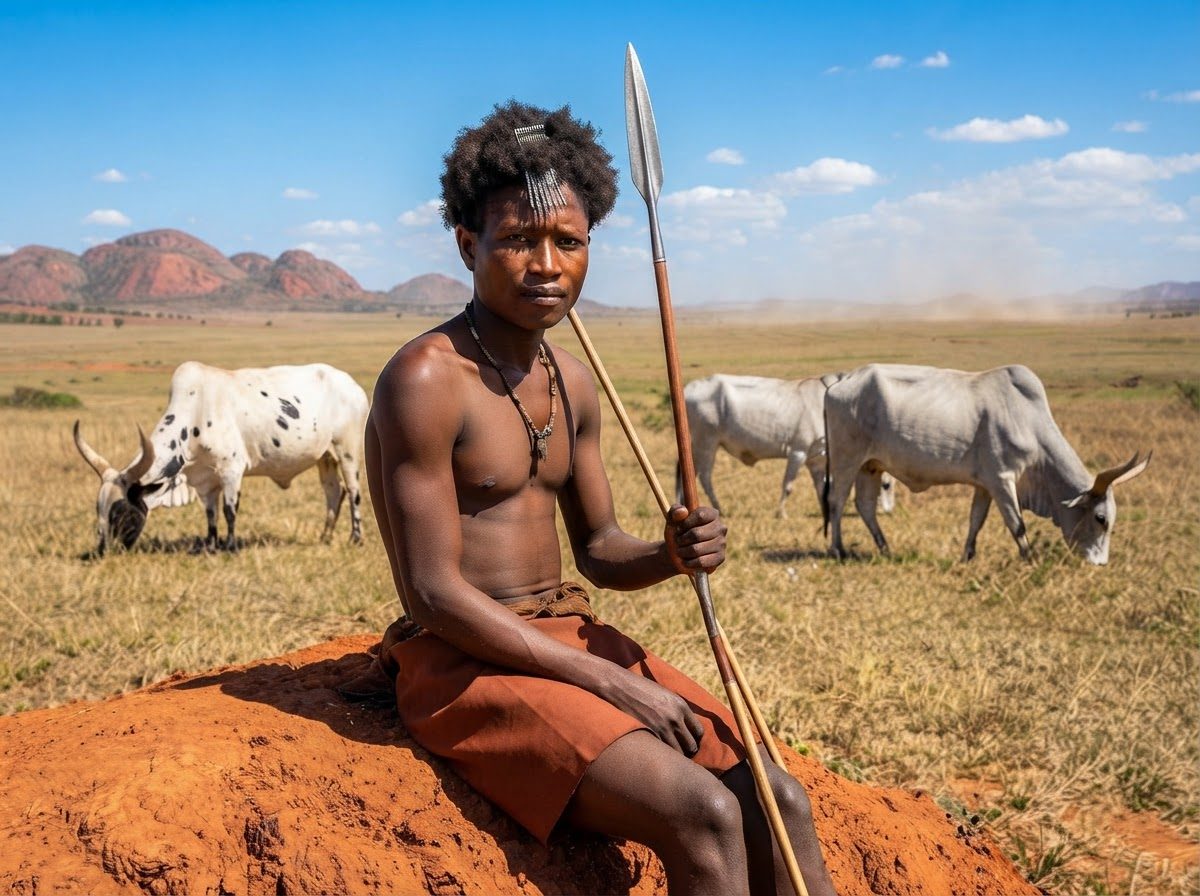
The name Antandroy means “people of the thorns”, referring to the endemic spiny thickets (fantsiholitra, roy) typical of their homeland, Androy. In the Anosy Region, they live in the south-west of Tolagnaro district and in Amboasary Atsimo district. A traditionally nomadic people, they were never subdued by any outside power — neither the highland kingdoms nor the French.
Social & clan organisation
Social organisation: Antandroy society is organised into patrilineal lineages (about 1,000 people each), within which each individual finds their identity. The great ceremonies — invoking the ancestors (soro), circumcision (savatse), funerals — take place at the foot of the hazomanga: a sacred post (a cluster of sharpened stakes) embodying the bond between all living and dead members of the same lineage. The hazomanga is kept by the mpisoro, the lineage patriarch and master of the ritual. In northern Androy the mpisoro are highly respected; in the south, the soro ceremony tends to be held within the family under the father's authority.
Culture, traditions & heritage
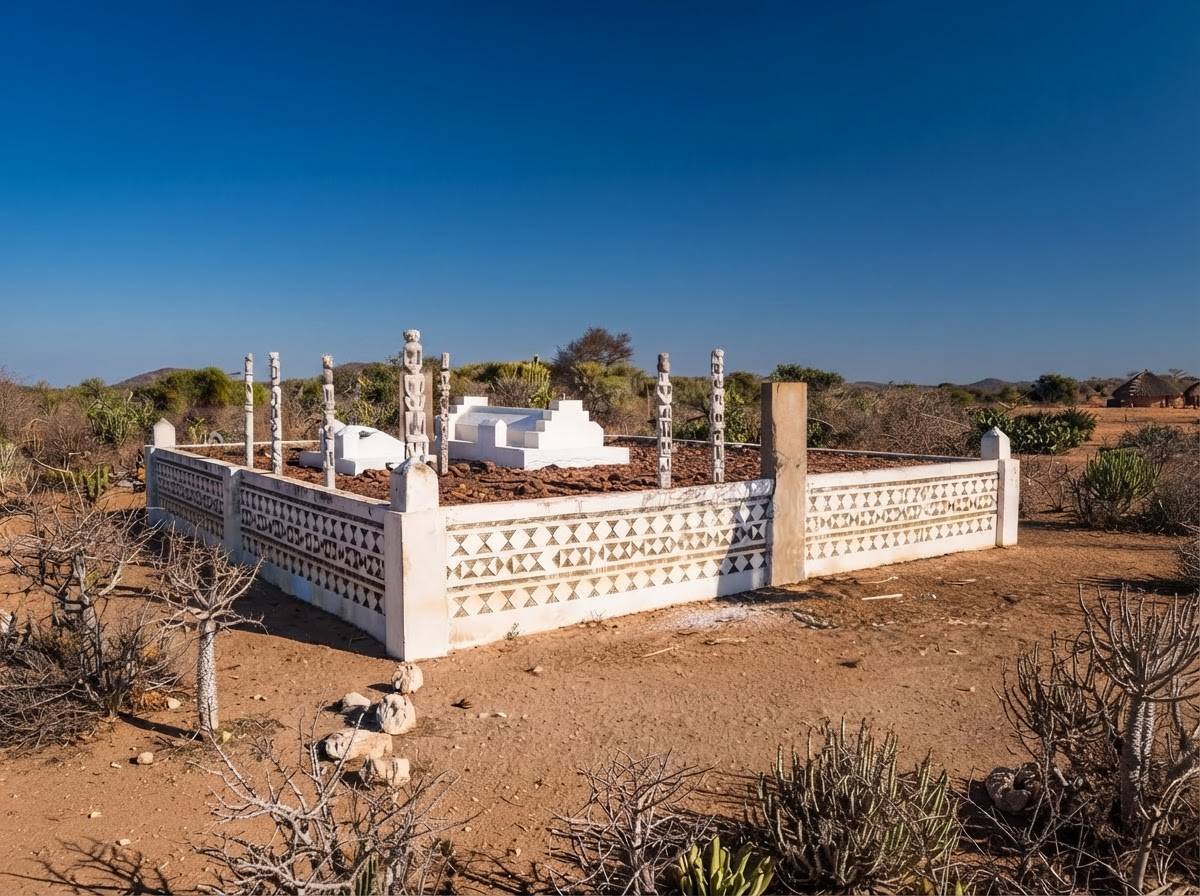
Antandroy tombs (fanesy) — rectangular, decorated with colourful paintings and the skulls of sacrificed zebus — are among the most spectacular in Madagascar. Spear dances are performed to the sound of recorders and shrill whistles, with rich polyphonic vocal harmonies. Music is played on the marovany (box zither of pine planks with strings of unwound bicycle cable), the mandôliny (4–6 string box lute, local name for the kabosy) and the lokanga (fiddle with a gourd resonator). The Antandroy are also skilled blacksmiths and weavers (lamba of wild silk and hand-spun cotton).
Fanesy (tombs)
Hazomanga / Mpisoro
Spear dance
Marovany
Mandôliny
Lokanga
Woven lamba
Total resistance