Memory & Identity

History & Culture

Antanosy, Bara & Antandroy — three peoples, one region, thousands of years of shared history.

🟡 Antanosy 🟢 Bara 🔵 Antandroy
Historical background

A crossroads of civilisations
at the heart of the Indian Ocean

The Anosy Region is one of the most history-laden lands in Madagascar. First documented European contacts from 1500, first permanent French colonial settlement in 1643 — and above all, the centuries-long coexistence of three peoples with distinct and complementary cultures: the Antanosy (coast and east), the Antandroy (south-west) and the Bara (interior).

Fort-Dauphin (Tôlanaro) is one of the few towns in Madagascar where 9th-century archaeological remains, 19th-century colonial architecture and three living cultural identities coexist — mangaliba, hazomanga, tsangambato, spear dance, the zebu cult. This layering gives Anosy an exceptional human and heritage wealth.

1500 First European contact (Diogo Dias)
1643 Founding of Fort-Dauphin
3 Peoples — Antanosy, Bara, Antandroy
809 k Inhabitants — 2018 census
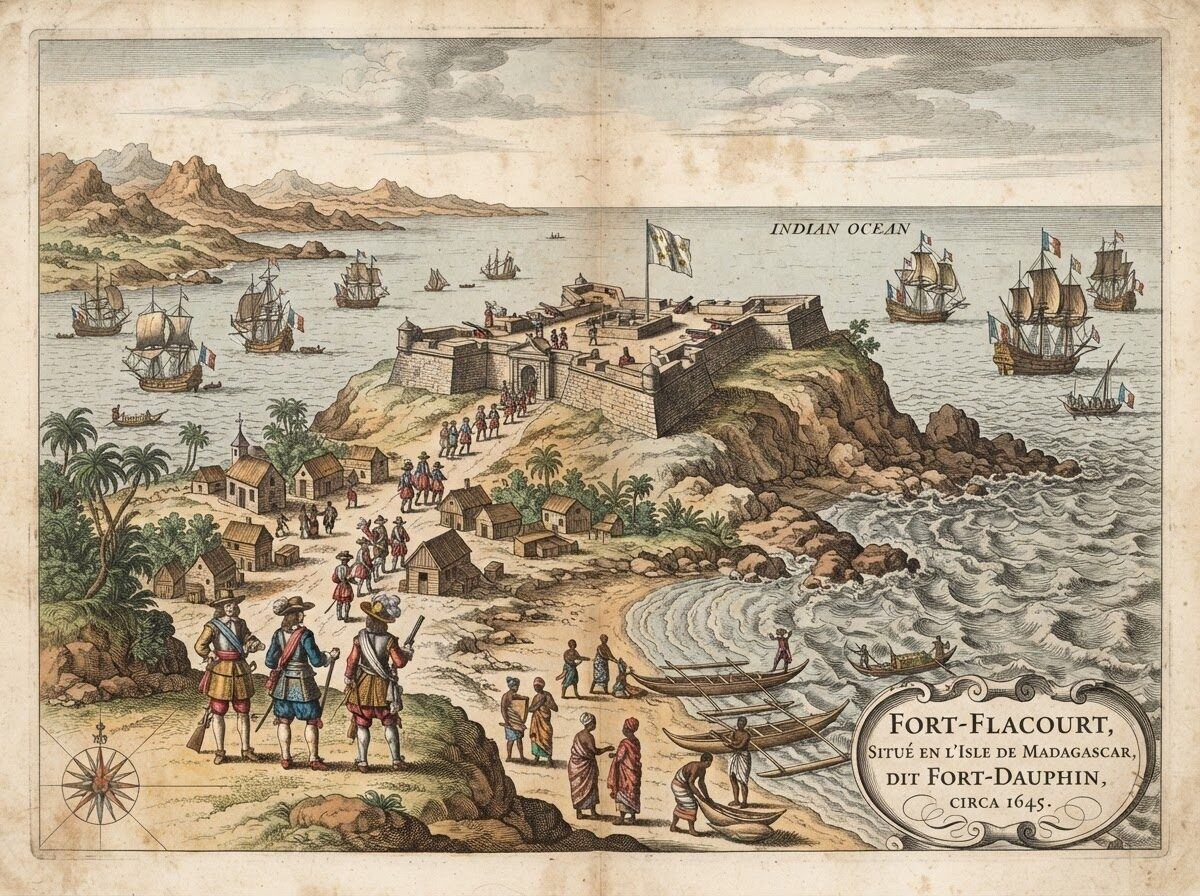
Historic view of Fort-Dauphin, a former French colony in Madagascar

“Étienne de Flacourt, governor of Fort-Dauphin from 1648 to 1655, published in Paris in 1658 the Histoire de la grande isle de Madagascar — the first systematic scientific description of the island, still cited by researchers today.”

— French East India Company, after JSTOR (2019)
Cultural identities

The three peoples
of the Anosy Region

Antanosy, Bara and Antandroy: three histories, three social organisations, three cultures — and a shared territory. Each people occupies a separate district: Tolagnaro (Antanosy and Antandroy), Amboasary Atsimo (Antandroy and Antanosy), Betroka (Bara).

Antanosy women in traditional dress, Anosy Region
🟡 Antanosy
Founding people of the Anosy Region East and coast · Tolagnaro District · ~360,000 (2013)

Antanosy

The Antanosy are the founding people of the Anosy Region. They live mainly in the eastern coastal area, between the Mandrare and Manantenina rivers. Descendants of the Zafiraminia (who settled in the 16th c.), they developed an irrigated-farming, maritime and trading civilisation organised around patrilineal clans (foko).

Culture, traditions & heritage

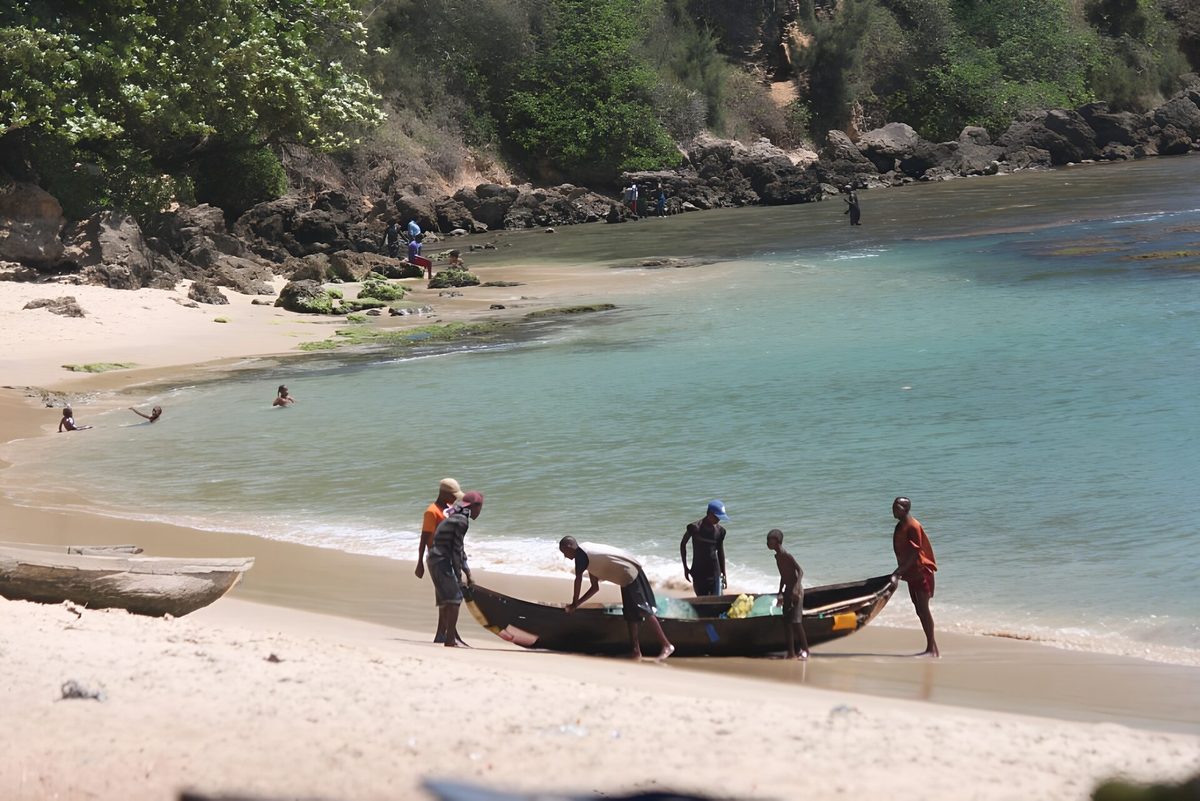
Antanosy culture is distinguished by its tsangambato (standing funerary stones, visible along the RN13), the ceremonial mangaliba dance popularised in the early 2000s by Dadah de Fort-Dauphin and the group Hazolahy, the maritime tradition of the dugout canoe — carved from a single tree trunk, with no outrigger, nails or glue — and music played on the mandôliny (a 4–6 string box lute, the local name for the kabosy, itself descended from the Arab oud via the Malay gambus). Bilo ceremonies (invoking the ancestors) are led by the ombiasy (healer-diviners).

Tsangambato Mangaliba Dugout canoe Foko / Mpanjaka Hazomanga Hainteny Mandôliny Ombiasy
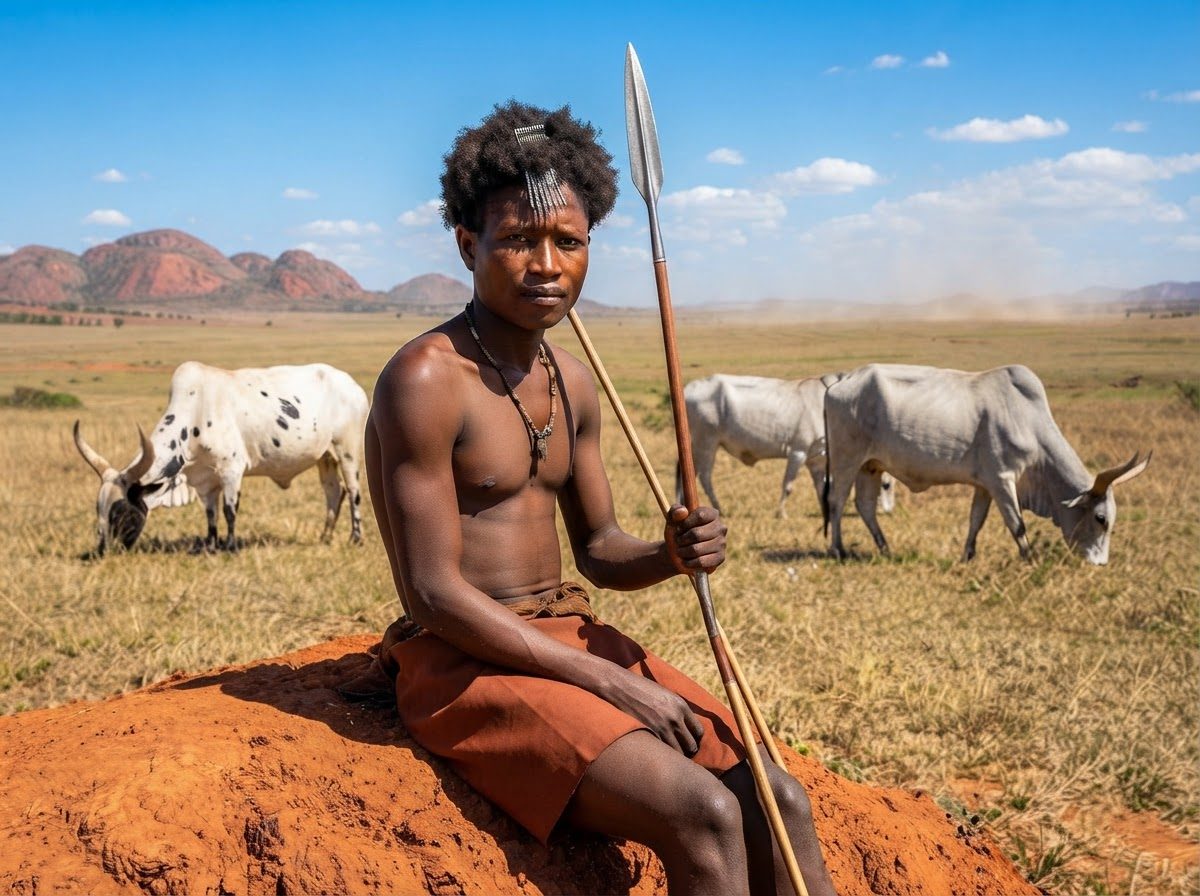
Bara herder with his zebus, Betroka district
🟢 Bara
Herders of the Ibara high plateaus Interior · Betroka District · ~590,000 (Madagascar)

Bara

The Bara are semi-nomadic herders whose historic territory, Ibara, extends over the high plateaus of southern Madagascar. In the Anosy Region, they mainly occupy the vast inland district of Betroka. Their name is said to come from Tanim-bara — “land of wealth” or “land of zebus” — underlining the central role of cattle in their identity. They are divided into five sub-groups: Ianatsantsa, Bara Be, Imamono, Vinda and Tivonjy.

Culture, traditions & heritage

Bara civilisation revolves around the zebu: a symbol of wealth, social prestige and a sacred bond with the ancestors. Rites of passage include the halats'omby (cattle raiding, formerly an initiation for young men). The Bara practise Moraingy and Ringa (traditional wrestling) at ceremonies. The Papango dance is emblematic: a dancer perched on top of a pole mimics the flight of a bird of prey. Funeral rites involve three stages: temporary burial, exhumation and transfer to the family tomb with zebu sacrifices.

Ibara Sacred zebu Hazomanga / Mpisoro Papango dance Moraingy / Ringa Halats'omby Ombiasy Betroka
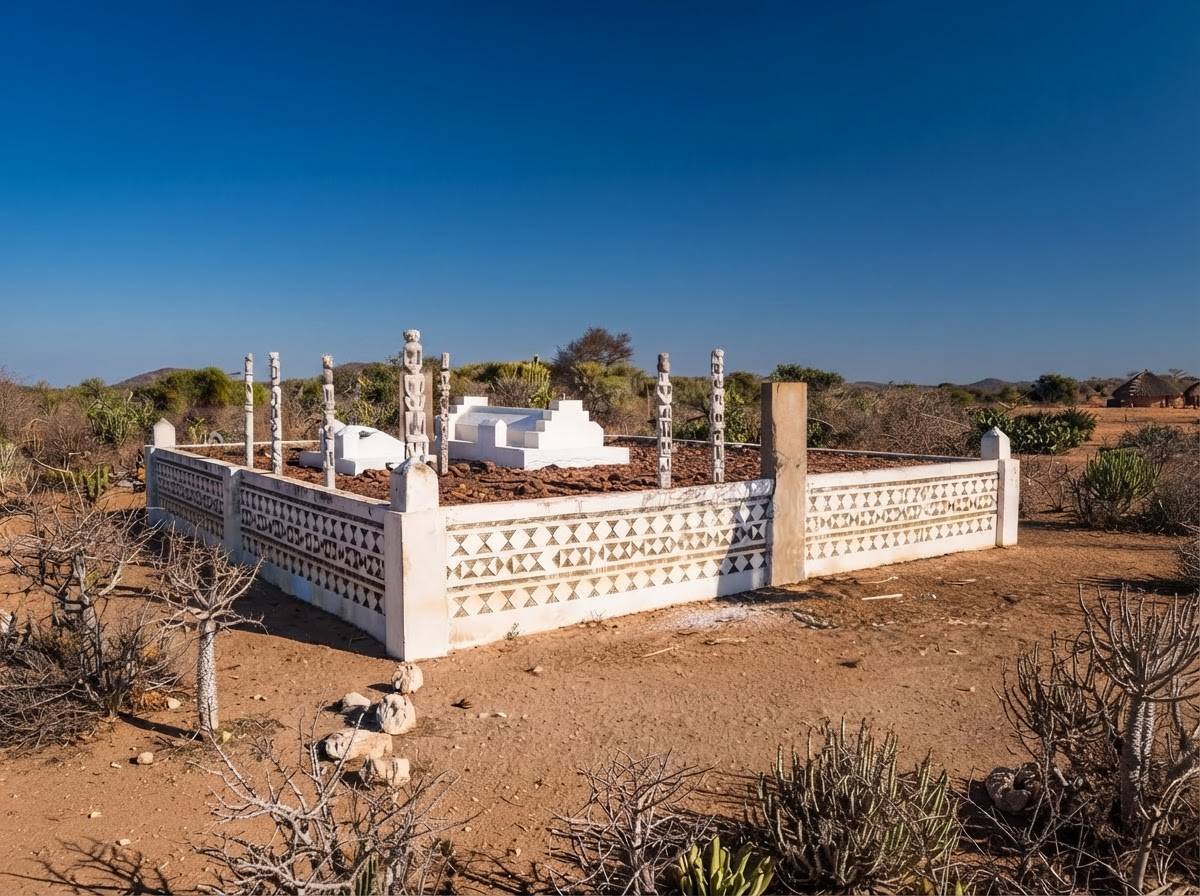
Tombe antandroy décorée, district d'Amboasary Atsimo
🔵 Antandroy
People of the thorns — the resisters of the Deep South South-west · Tolagnaro & Amboasary Atsimo districts · ~600,000 (2013)

Antandroy

The name Antandroy means “people of the thorns”, referring to the endemic spiny thickets (fantsiholitra, roy) typical of their homeland, Androy. In the Anosy Region, they live in the south-west of Tolagnaro district and in Amboasary Atsimo district. A traditionally nomadic people, they were never subdued by any outside power — neither the highland kingdoms nor the French.

Culture, traditions & heritage

Antandroy tombs (fanesy) — rectangular, decorated with colourful paintings and the skulls of sacrificed zebus — are among the most spectacular in Madagascar. Spear dances are performed to the sound of recorders and shrill whistles, with rich polyphonic vocal harmonies. Music is played on the marovany (box zither of pine planks with strings of unwound bicycle cable), the mandôliny (4–6 string box lute, local name for the kabosy) and the lokanga (fiddle with a gourd resonator). The Antandroy are also skilled blacksmiths and weavers (lamba of wild silk and hand-spun cotton).

Fanesy (tombs) Hazomanga / Mpisoro Spear dance Marovany Mandôliny Lokanga Woven lamba Total resistance

Verified timeline

The historical saga
of the Anosy Region

Eight major documented periods, from the first archaeological occupations of the 9th century to the contemporary economic revival.

Prehistoric settlement 9th – 16th century

The first communities of Anosy

Documented archaeological phases

Archaeology distinguishes several phases of occupation in the Efaho valley: the Maliovola phase (9th–12th c.), combining cattle herding and fishing; the Ambinanibe phase (13th c.), marked by the introduction of ironworking and links to Indian Ocean trade networks, notably imports of Chinese celadon; and finally the Tranovato phase (15th–16th c.), with the rise of fortified chiefdoms and irrigated rice growing. In the 14th century, the Zafiraminia — arabised ancestors of Comorian and Indian origin — settled in Anosy and founded a lasting royal line there. Meanwhile, the ancestors of the Bara settled on the high plateaus of Ibara, and those of the Antandroy gradually occupied the spiny region of the south-west.

  • 9th–12th c. — Maliovola phase: herding and fishing
  • 13th c. — Ironworking and trade with China
  • 14th c. — Arrival of the Zafiraminia (royal line)
  • 15th–16th c. — Fortified chiefdoms, irrigated rice growing
  • High plateaus: gradual settlement of the Bara ancestors
European contacts 1500 – 1641

The Portuguese & the first French presence

First encounters with Europe

On 10 August 1500 (the feast of Saint Lawrence), the Portuguese navigator Diogo Dias, blown off course by a storm as the Cabral fleet returned to India, landed on Madagascar and named it ilha de São Lourenço — the first European to set foot on the island. In 1613, the Portuguese landed at Manafiafy (Sainte-Luce), where King Andriantsiambany welcomed them with 500 warriors. From 1638, eight Frenchmen including François Cauche settled at Sainte-Luce, living on good terms with the local Antanosy and trading with them.

  • 10 August 1500 — Diogo Dias, first European in Madagascar
  • 1613 — Portuguese landing at Manafiafy
  • 1638 — First French at Sainte-Luce (Manafiafy)
  • Trade in cattle, rice and slaves with the Antanosy
French colonisation I 1642 – 1674

Founding & abandonment of Fort-Dauphin

The French East India Company

In September 1642, Jacques Pronis (1619–1655), a colonial administrator born in La Rochelle, took possession of Madagascar in the name of King Louis XIII and settled at Sainte-Luce. Faced with the unhealthy climate and deaths, he spotted the peninsula of Toalankaro and founded Fort-Dauphin there in 1643. Étienne de Flacourt succeeded him as governor from 1648 to 1655 and wrote the Histoire de la grande isle de Madagascar (published in Paris in 1658), the first systematic scientific description of the island. Recurring conflicts with the Antanosy led to the massacre of 27 August 1674: most of the French present were killed; the survivors reached Île Bourbon (Réunion), making an essential contribution to its first settlement. This period is also the first in which the Antandroy appear in European sources, under the name Ampatres.

  • 1642 — Pronis takes possession of Madagascar
  • 1643 — Official founding of Fort-Dauphin
  • 1648-1655 — Governorship of Étienne de Flacourt
  • 1658 — The Histoire de la grande isle published in Paris
  • 27 August 1674 — Massacre and final abandonment of the colony
  • Antandroy (then called Ampatres) mentioned for the first time
Sovereignty regained 1674 – 1824

The influence of the peoples of Anosy

Autonomy and ocean trade

After the French withdrawal, the Antanosy regained full sovereignty for almost 150 years. The region joined the Indian Ocean trade networks — cattle, slaves, rice, amber and pearls — with Arab, Indian and European traders. Successive mpanjaka dynasties ruled a prosperous territory where the ombiasy maintained the bonds between the living and the ancestors. In the south, the Antandroy asserted their identity under the ritual authority of the mpisoro and their hazomanga. The Bara consolidated their five sub-groups (Ianatsantsa, Bara Be, Imamono, Vinda, Tivonjy) on the high plateaus of Ibara. A French attempt to re-establish the colony from 1768 to 1771 failed after three years.

  • ~150 years of full Antanosy sovereignty (1674–1824)
  • Active trade: cattle, slaves and rice across the Indian Ocean
  • Antandroy: consolidation under the authority of the mpisoro
  • Bara: organised into 5 sub-groups on Ibara
  • 1768-1771 — Failed French attempt to re-establish the colony
Expansion from the centre of the island 1825 – 1895

Pressure from the highland kingdoms

Resistance and migration in the Deep South

In 1825, a military post of the highland kingdoms was set up in Fort-Dauphin, extending their authority over the south-east coast. In the following decades this pressure caused a mass exodus: between 1840 and 1860, about 80,000 Antanosy migrated to the Onilahy valley to escape this rule — 30,000 of them in a single movement in 1845. The Antandroy, protected by the difficult spiny country of Androy, resisted successfully and were never incorporated into these kingdoms. The Bara of the high plateaus kept their own traditional organisation around the hazomanga and zebu herding. The London Missionary Society (LMS) introduced leatherwork in the 1850s.

  • 1825 — Highland military post set up in Fort-Dauphin
  • 1840-1860 — Exodus of ~80,000 Antanosy to the Onilahy valley
  • 1845 — Mass movement of 30,000 Antanosy
  • Antandroy: total resistance to any outside rule
  • Bara: clan organisation around the hazomanga preserved
  • 1850s — LMS missions: leatherwork introduced in Anosy
French colonisation II 1895 – 1960

Madagascar, a French colony

Incorporation into the colonial empire

Madagascar was conquered by France during the second expedition (1894–1895) and officially became a French colony by the law of 6 August 1896. In Anosy, tracks, schools and administrative posts were gradually developed. The Antandroy — considered by the French administration the hardest to govern — seized European trading posts in 1895 and held out until 1905 thanks to their prickly-pear hedges (raketa). In 1920, the deliberate introduction of a parasite destroyed almost all the prickly pears, causing a catastrophic famine in Androy. The Bara were also subjected to forced labour and taxes. In 1942, British forces replaced the Vichy administration, before Free France returned.

  • 1895-1896 — French conquest and colonisation of Madagascar
  • 1895 — The Antandroy seize European trading posts
  • 1905 — Forced submission of Androy by France
  • 1920 — Destruction of prickly pears: catastrophic famine in Androy
  • 1942 — The British replace the Vichy administration
Independence & development 1960 – 2007

Independence & nation-building

26 June 1960 — Birth of the Republic

Madagascar became independent on 26 June 1960. The Anosy Region remained isolated, dependent on subsistence farming, artisanal fishing and zebu herding — the economic and cultural pillar of the Bara and the Antandroy. In 1971, an Antandroy peasant revolt in Toliara against tax corruption contributed to the fall of President Tsiranana and the First Republic. In the 1980s Anosy was identified as one of Madagascar's most ecologically diverse regions, triggering an influx of international conservation NGOs. Andohahela National Park (76,140 ha, created in 1932, Ramsar site) became a major ecotourism hub.

  • 26 June 1960 — Independence of Madagascar
  • Local economy: farming, fishing, zebu herding
  • 1971 — Antandroy peasant revolt: fall of President Tsiranana
  • 1980s — Anosy Region ranked among the richest in biodiversity
  • Andohahela National Park: a regional ecotourism hub
Contemporary era 2008 – Today

QMM, the Port of Ehoala & economic revival

The era of strategic investment

The discovery of vast deposits of ilmenite, zircon, rutile and monazite transformed the regional economy. QIT Madagascar Minerals (QMM), a joint venture between Rio Tinto (80%) and the Government of Madagascar (20%), began its first ilmenite production at the end of 2008. The public Port of Ehoala, opened in 2009, opened the region to international trade. In 2023, Rio Tinto and the Malagasy Government renewed their partnership for USD 100 M over 25 years. At the same time, the promotion of the three peoples' heritage is progressing: the annual Katrehaky festival in Fort-Dauphin (Antanosy mangaliba), promotion of Bara crafts and Antandroy weaving.

  • End of 2008 — First QMM output (ilmenite, zircon, monazite)
  • 2009 — Opening of the public Port of Ehoala
  • 2023 — Rio Tinto / Government agreement renewed: USD 100 M
  • Katrehaky festival: showcase of Anosy's cultural heritage
Living cultures

What unites & what distinguishes
the three peoples of Anosy

Despite their differences, the Antanosy, Bara and Antandroy share common cultural foundations — ancestor worship, hazomanga, ombiasy, zebu — while expressing traditions of their own.

Antanosy · Bara · Antandroy

The hazomanga — a universal sacred bond

Common to all three peoples of Anosy, the hazomanga is the central ritual marker of lineage organisation in southern Madagascar. It refers both to a sacred space (stake, post or marked-off area) and to the person who officiates there — the mpisoro (among the Antandroy and Bara) or the patriarch of the foko (among the Antanosy). All of life's great ceremonies — births, circumcisions, marriages, funerals, sacrifices — take place there. Located north-east of the patriarch's house, this space may only be used by members of the same lineage.

Antanosy

Mangaliba — the emblematic Antanosy dance

Originally danced by children in everyday life, the mangaliba has become the emblematic ceremonial dance of the Antanosy people, performed at rituals and festivities. In its modern musical form, artists such as Dadah de Fort-Dauphin and the group Hazolahy brought it to national stages in the early 2000s, blending it with electric rhythms. It is traditionally accompanied on the mandôliny. The Katrehaky festival (Fort-Dauphin, every August) is its main showcase.

Bara · Antandroy · Antanosy

The zebu — at the heart of three cultures

The zebu is at the heart of the economic, social and spiritual life of all three peoples. For the Bara, it is absolute wealth, an offering at the hazomanga and the focus of initiation rites (halats'omby). For the Antandroy, zebu skulls adorn tombs to show the wealth of the deceased. For the Antanosy, cattle raising has been a major trading activity since the first contacts with the Indian Ocean. In all three cases, the zebu sacrificed at ceremonies is the supreme offering to the ancestors (razana).

Antanosy · Antandroy

Music of the Deep South

The mandôliny — a 4–6 string Malagasy box lute (local name for the kabosy), descended from the Arab oud via the Malay gambus — is the emblematic instrument of the Antanosy and Antandroy of the Anosy region. Among the Antandroy, the marovany (box zither of pine planks with bicycle-cable strings) and the lokanga (gourd fiddle) complete the traditional sound palette. These instruments accompany wakes, ancestor-invocation ceremonies and community festivities.

Antanosy · Bara · Antandroy

Ancestor worship & Ombiasy

All three peoples share the cult of the ancestors (razana) as the foundation of their cosmology. The ombiasy — healer-diviners, astrologers and keepers of traditional knowledge — practise sikidy (divination with seeds) and prepare ody (protective amulets). These mediators between the world of the living and that of the ancestors are respected and consulted in every community for life's important decisions.

Antanosy · Bara · Antandroy

Fady — ancestral taboos

Fady (ancestral taboos) are universal in all three cultures. They govern daily activities, food, the orientation of houses and behaviour towards the ancestors. Among the Antandroy, women are forbidden to milk zebus. For the Bara, some hazomanga ceremonies are strictly reserved for lineage members. Among the Antanosy, the north-east corner of the house is sacred and reserved for the razana. Breaking a fady has serious ritual consequences that only an ombiasy can lift.

Living heritage

Three expressions
of Anosy's heritage

Antanosy dugout canoe carved from a single trunk, without an outrigger 🟡 Antanosy

The Antanosy dugout canoe

An emblem of Antanosy culture, the traditional dugout canoe is carved from a single trunk, with no outrigger, nails or glue. Its slender shape makes it light and easy to handle in lagoons and coastal estuaries. This dugout craft, passed down orally from father to son, shows the Antanosy's maritime technical skill since the 13th c.

Bara herders and their zebu herds, Betroka district 🟢 Bara

The zebu, soul of Bara culture

For the Bara, the zebu is absolute wealth, a sacred bond with the ancestors and the focus of every rite of passage. Sacrifices at the hazomanga, officiated by the mpisoro (lineage patriarch), structure religious and social life. The Papango dance — a dancer who mimics the flight of a bird of prey from the top of a pole — and Moraingy / Ringa wrestling punctuate the great community ceremonies.

Antandroy tomb decorated with paintings and zebu skulls 🔵 Antandroy

The fanesy — monumental Antandroy tombs

Antandroy tombs (fanesy — “your eternal place”) are massive rectangular structures decorated with colourful paintings and topped with the skulls of sacrificed zebus, showing the wealth of the deceased. All funeral ceremonies are held at the foot of the hazomanga, under the authority of the mpisoro. The house of the deceased is then burned to close the rites.

“Tany misy olombe tsy mialy zaza — a well-guided community avoids needless conflict.”

— Proverb from southern Madagascar

Fort Flacourt

Remains of the colonial fort founded in 1643 by Jacques Pronis on the Toalankaro peninsula. A witness to the first permanent French settlement in Madagascar and to the massacre of 27 August 1674.

Saint-Vincent-de-Paul Cathedral

Seat of the Diocese of Tôlagnaro, built in 1969. Recognisable by its square bell tower and distinctive façade, it is Fort-Dauphin's main Catholic place of worship. Fort-Dauphin was the seat of the Apostolic Vicariate of the Deep South from 1896 to 1955, then a canonical diocese to this day.

Andohahela National Park

76,140 ha, Ramsar site (created in 1932/1939). Three ecosystems: tropical rainforest, transition forest and south-western spiny bush. Endemic lemurs, radiated tortoises, 130 bird species. Accessible from Fort-Dauphin (RIP118).

Public Port of Ehoala

Deep-water port opened in 2009, developed by Rio Tinto/QMM, the Government of Madagascar and the World Bank. Exports of ilmenite, zircon and monazite. Imports of essential goods for the Deep South.

Editorial transparency

Sources & references
for this page

Continue exploring
the Anosy Region